
- At the beginning of this scene we see Treadwell standing in the lake, posing for the camera by pretending to film something.
- There is background music of very slow and sombre violin noises; this is trying to manipulate the audience by evoking an emotional response for Treadwell as this music in combination with the shot tries to portray him as isolated or distant from the real world.
- Werner Herzog narration: "Beyond his posings, the camera was his only present companion. It was his instrument to explore the world around him; but increasingly it became something more, he started to scrutinise his inner most being, his demons, his exhilarations. Facing the lens of a camera, took on the quality of a confessional."
- In Herzog's narration it tries to prove Treadwell and flawed to make him mor of a three-dimensional character/protagonist. This extremely prevalent when he says "he started to scrutinise his inner most being, his demons, his exhilarations".
- The shot changes to Treadwell interviewing himself in the woods.
- Herzog's narration: "Covering various years, the following samples illustrate the search for himself."
- Treadwell stands addressing the camera directly.
- Treadwell: "I have no idea if there is a God. But God would be very very proud of me."
Monday, 29 February 2016
Grizzly Man // Scene Analysis (40:44 - 44:41)

Grizzly Man // Scene Analysis - 'Mr Chocolate'
Friday, 27 November 2015
City of God // Power, Poverty and Conflict - Analysis in the Opening Scene
In this scene we see people having a party, they are dancing, playing music and eating food. A chicken is escapes from the other and Lil' Ze asked everyone to go after it, people chase it with guns and they shoot at the chicken to stop it, they do this for fun (we are introduced to the crazy violence of the City of God. We cut to a shot of rocket and his friend talking about the opportunity that has arrived for him in photography for the newspaper. We cut back to the chicken chase and Lil' Ze asks a man to catch it that they pass he fails and Lil' Ze gets his gun out. The chicken runs out in to the road and squats under a car. This is where Lil' Ze and Rocket collide. Ze asked him to grab the chicken. The police pull up on the other end of the road and Ze's gang pull out their guns ready for a fight. Rocket as the narrator talks about how a picture can change his life but he may never escape the City of God because if the gangs won't get him the police will eventually.
 + The fast paced editing of the knife being sharpened places a tense ambiance over the audience. The sharpening of the knife could be a foreboding motif for the excessive and constant violence that is frequent throughout the film. The diegetic sound of the knife being sharpened sets the tone for the film of senseless violence this combined with non-diegetic sound of the samba music creates this feel that the violence is almost comical.
 + The fast paced editing of the knife being sharpened places a tense ambiance over the audience. The sharpening of the knife could be a foreboding motif for the excessive and constant violence that is frequent throughout the film. The diegetic sound of the knife being sharpened sets the tone for the film of senseless violence this combined with non-diegetic sound of the samba music creates this feel that the violence is almost comical.
+ The use of a close-up shot on Lil' Ze's face emphasises a mad and mentally insane demeanour about his, this idea is strengthened by the fact that he is laughing. The close-up in almost a low angle shot, which could be a foreshadowing to his power and status we find out about later on in the film. When Lil' Ze shouted at everyone to go after the chicken Lil' Ze swears, this could emphasise the cruel and brutal nature of the favelas. that they live in
Mise-En-Scene - DEFINITION
Mies-En-Scene is made up from these elements:
- Lighting
- Space
- Set Design
- Composition
- Costume
Monday, 5 October 2015
Film Response - City of God (Directed by Fernando Meirelles and Kátia Lund)

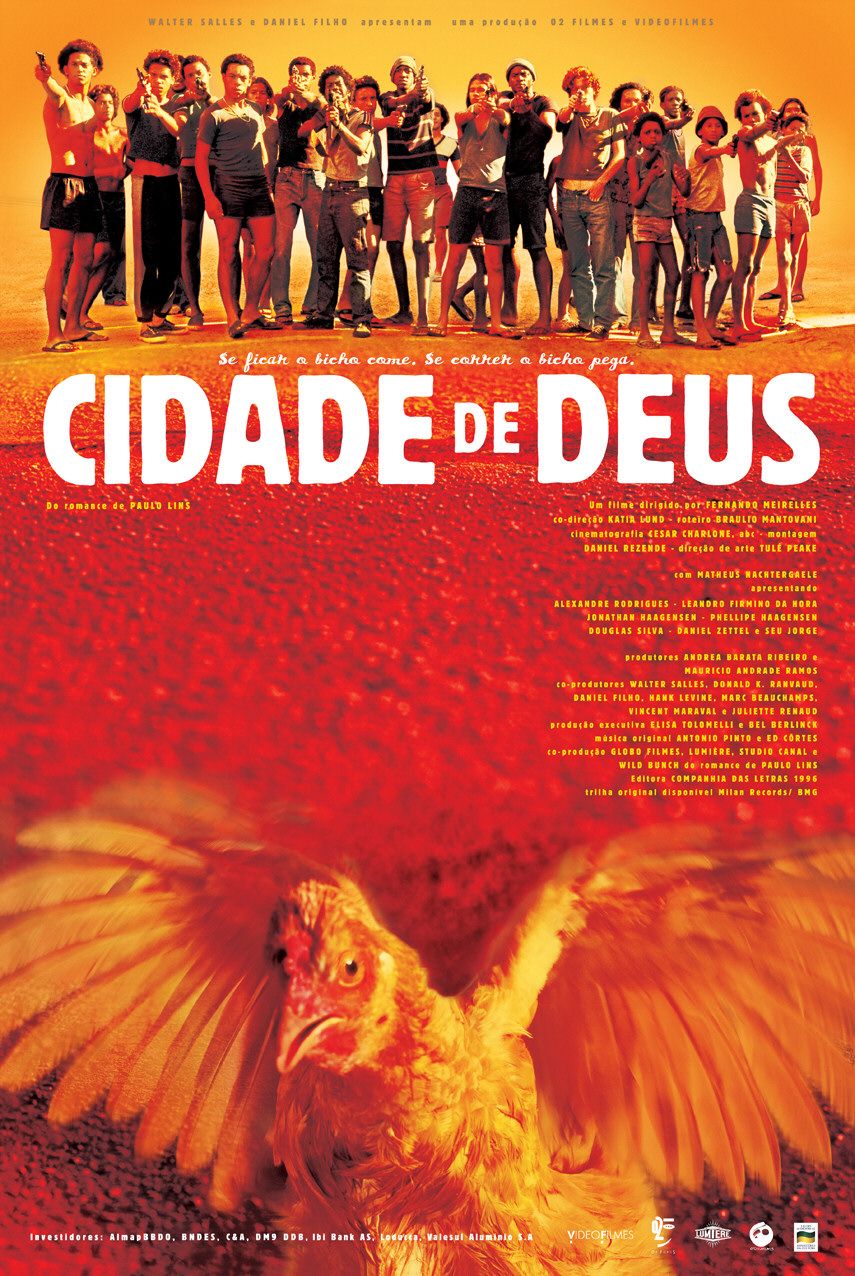
The film revolves around the, 'City of God,' a favela (or ghetto) in Rio de Janeiro, Brazil, a horrifying area where drug dealers run the community, and where children killing children is not an uncommon occurrence. The story begins with the early stages of the City of God (in the 1960's) showing where many of the problems stem from- the extreme poverty, overcrowding etc. Here, in the early stages of the favela, we meet our main characters, along with the supporting cast. The story revolves mainly around two characters living in the favela, Rocket and Lil Ze, and how they take two different paths through life. Rocket's dream is to become a photographer and to escape the City of God while Lil Ze becomes a powerful gang leader and drug dealer. The film offers an unflinching look at gang life in the City of God, as it follows the favela through three decades; the 60's, 70's and 80's, and shows how violence just spirals into more violence with the disturbingly high amounts of violence in the favela, most involving teenagers and children.
The direction, cinematography, and editing are all Oscar-worthy. The cinematography is some of the best I have ever seen - with a very visceral, jerky feel. The editing is very frantic, which makes you feel like you are on the streets of the City of God, and the direction is flawless, seamlessly blending the many elements of the story. The story, the direction, the cinematography, the editing and the acting all add up to make a excellent movie that I would recommend to all. The images of gun toting pre-teen killers are very disturbing and Meirelles uses them relentlessly to underscore just how hopeless and frighteningly predetermined life is for these kids.
The direction, cinematography, and editing are all Oscar-worthy. The cinematography is some of the best I have ever seen - with a very visceral, jerky feel. The editing is very frantic, which makes you feel like you are on the streets of the City of God, and the direction is flawless, seamlessly blending the many elements of the story. The story, the direction, the cinematography, the editing and the acting all add up to make a excellent movie that I would recommend to all. The images of gun toting pre-teen killers are very disturbing and Meirelles uses them relentlessly to underscore just how hopeless and frighteningly predetermined life is for these kids.
Wednesday, 23 September 2015
Macro and Micro
Micro Elements
- Editing
- Sound
+ Diegetic Sound - Sound whose source is visible on the screen or whose source is implied to be present by the action of the film.
+ Non-diegetic Sound - Sound whose source is neither visible on the screen nor has been implied to be present in the action.
- Camera Angle/Movement
- Mise-en-scene
+ Make-up
+ Costume
+ Props
+ Location
+ Lighting
Macro Elements
- Representation
- Genre
- Narrative
- Audience
Wednesday, 4 March 2015
Film Response - The Last Seduction (Directed by John Dahl)

3.8
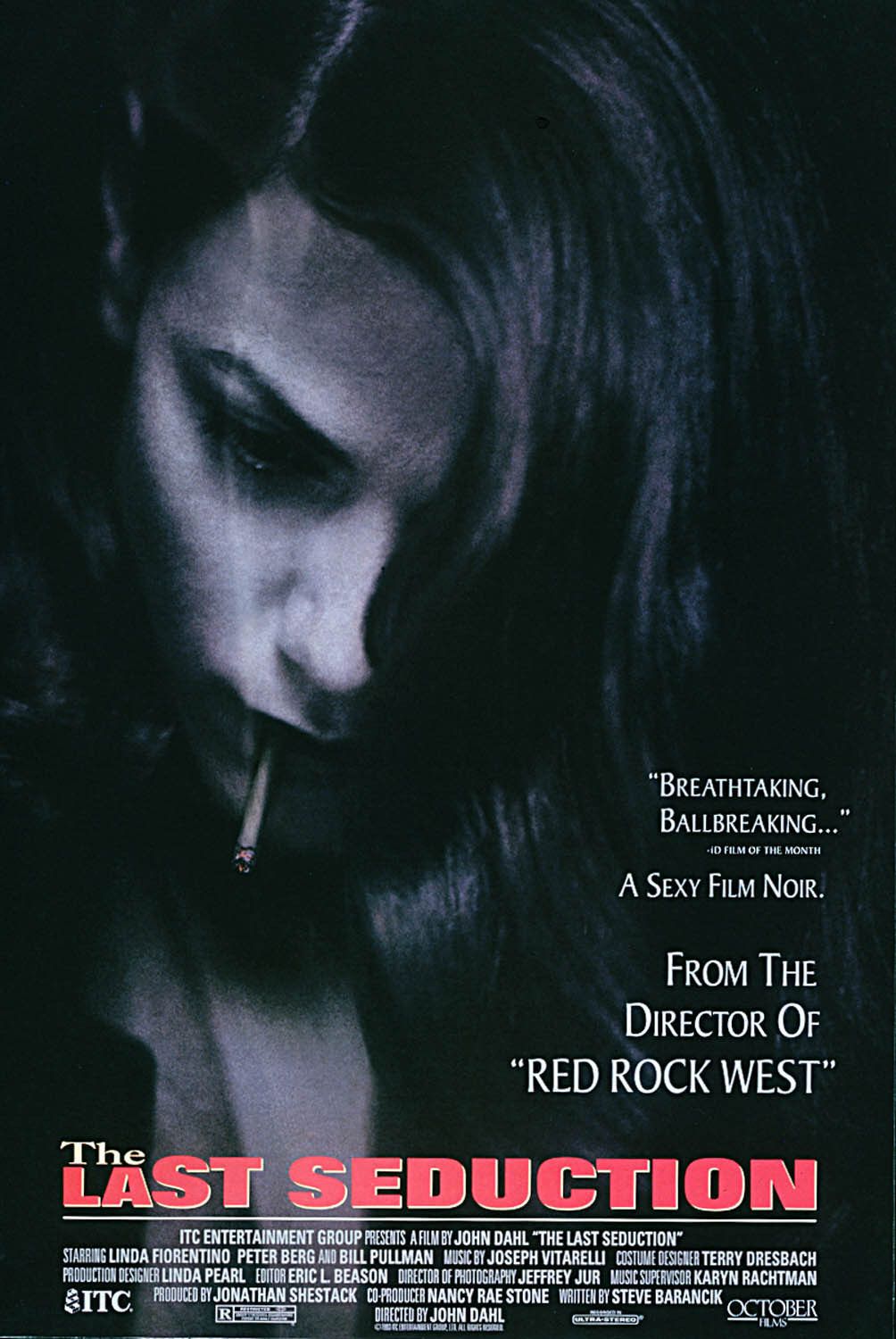 The Last Seduction is a film I have very mixed feelings about. The highly gritty nature of the film, at times, can seem a bit too accessive; the nudity, the language and the general emotional overtones can seem over the top and there to just make the film purposefully shocking. However without it I don't believe the film woul be as effect to create dominance and strength for the character Bridget. Bridget, as vindictive and sour as she may seem, is such a refreshing character to come across. It is rare these days that we see such a strong and masterful female character, anti-heroes like this are a joy to watch and I am a sucker for an anti-hero.
 The film falls in to the Neo-Noir genre, but I like to think of it very separte from Noir itself. The Last Seduction has thrown the Hays Code out of the window, not a window - more like cliff. It is so far from any kind of any restrictions, the creators really have gone for it and gone for it hard. It is possible that with some restrictions that the film could have creatively gone around them, but would this of made a better film? I don't think so. The film was made for a modern audience, this is obvious, but it is so far past the original genre, I think it's stiring it to a wrong place.
Film Response - Double Indemnity (Directed by Billy Wilder)

4.5

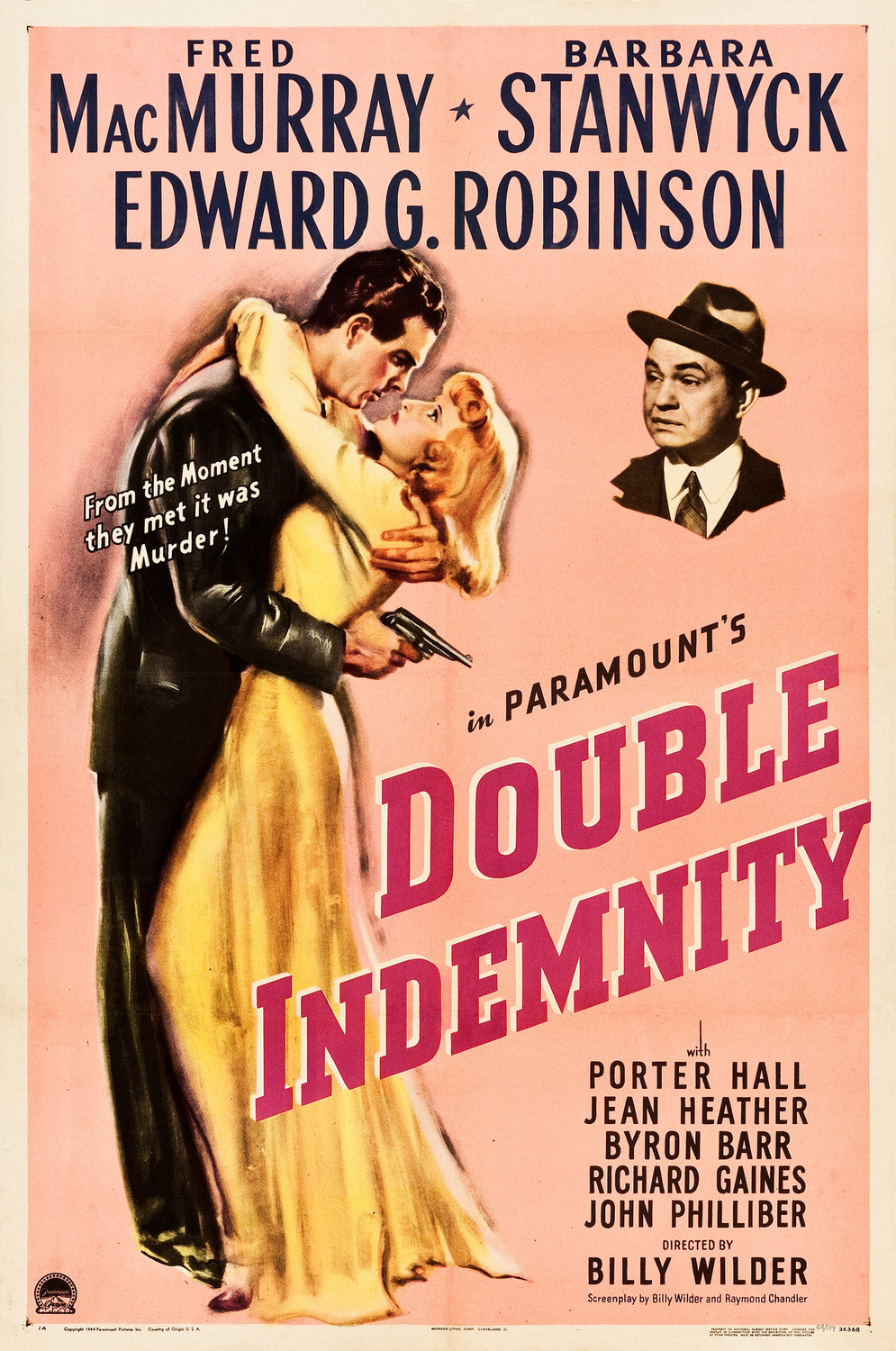 Double Indemnity is a story about an insurance representative who lets himself be talked into a
murder/insurance fraud scheme that arouses an insurance investigator's
suspicions. I really enjoyed this film. It was, admittedly, the first noir I ever watched and I feel that it won't be the last. What was especially enjoyable to me was the fact that many of the visuals often had second meanings, for example the venetian blinds could mean entrapment or the use of cigarettes to show the friendship between Barton and Walter. Sixty years later, it's as taut and engaging and
beautiful as any contemporary story. It simmers, it sizzles, the tension between Neff and Dietrichson is
positively palpable. But, as the tension between Neff and Dietrichson
fizzles, the tension between Neff and Keyes heats up. It's as pure a sample of classic film noir as there is, and it does it with
unparalleled style. The story of how and why he dunit, of how he was intoxicated and bewitched,
yet came to his senses, not soon enough to save him legally, but at least to
come to terms with his own failure was it's own level of great. Fun, different, refreshing. At least to me, that's Double Indemnity.
Double Indemnity is a story about an insurance representative who lets himself be talked into a
murder/insurance fraud scheme that arouses an insurance investigator's
suspicions. I really enjoyed this film. It was, admittedly, the first noir I ever watched and I feel that it won't be the last. What was especially enjoyable to me was the fact that many of the visuals often had second meanings, for example the venetian blinds could mean entrapment or the use of cigarettes to show the friendship between Barton and Walter. Sixty years later, it's as taut and engaging and
beautiful as any contemporary story. It simmers, it sizzles, the tension between Neff and Dietrichson is
positively palpable. But, as the tension between Neff and Dietrichson
fizzles, the tension between Neff and Keyes heats up. It's as pure a sample of classic film noir as there is, and it does it with
unparalleled style. The story of how and why he dunit, of how he was intoxicated and bewitched,
yet came to his senses, not soon enough to save him legally, but at least to
come to terms with his own failure was it's own level of great. Fun, different, refreshing. At least to me, that's Double Indemnity.Friday, 21 November 2014
Film Response - Cape Fear (Directed by Martin Scorsese)

2.6

One of the key things about this film that seriously gets on my nerves is the acting of Juliette Lewis as her character Danielle. The have been other films in which I found her acting a little sterile, non more so than this particular film. Essentially the acting is just bad but to be more specific she seems like she doesn't quite know what shes doing, her body language is confusing and forced.
But what I will merit the film on is Cady's brand of evil is quite disturbing and he brutally takes it out on the clerk, Lori who has a crush on Sam. The scene with him seducing the young Danielle who's just started to explore her sexuality and is mainly attracted to the bad guys and anyone who makes her father angry, was chilling to say the least.
Thursday, 13 November 2014
Film Response - Skyfall (Directed by Sam Mendes)

3.7
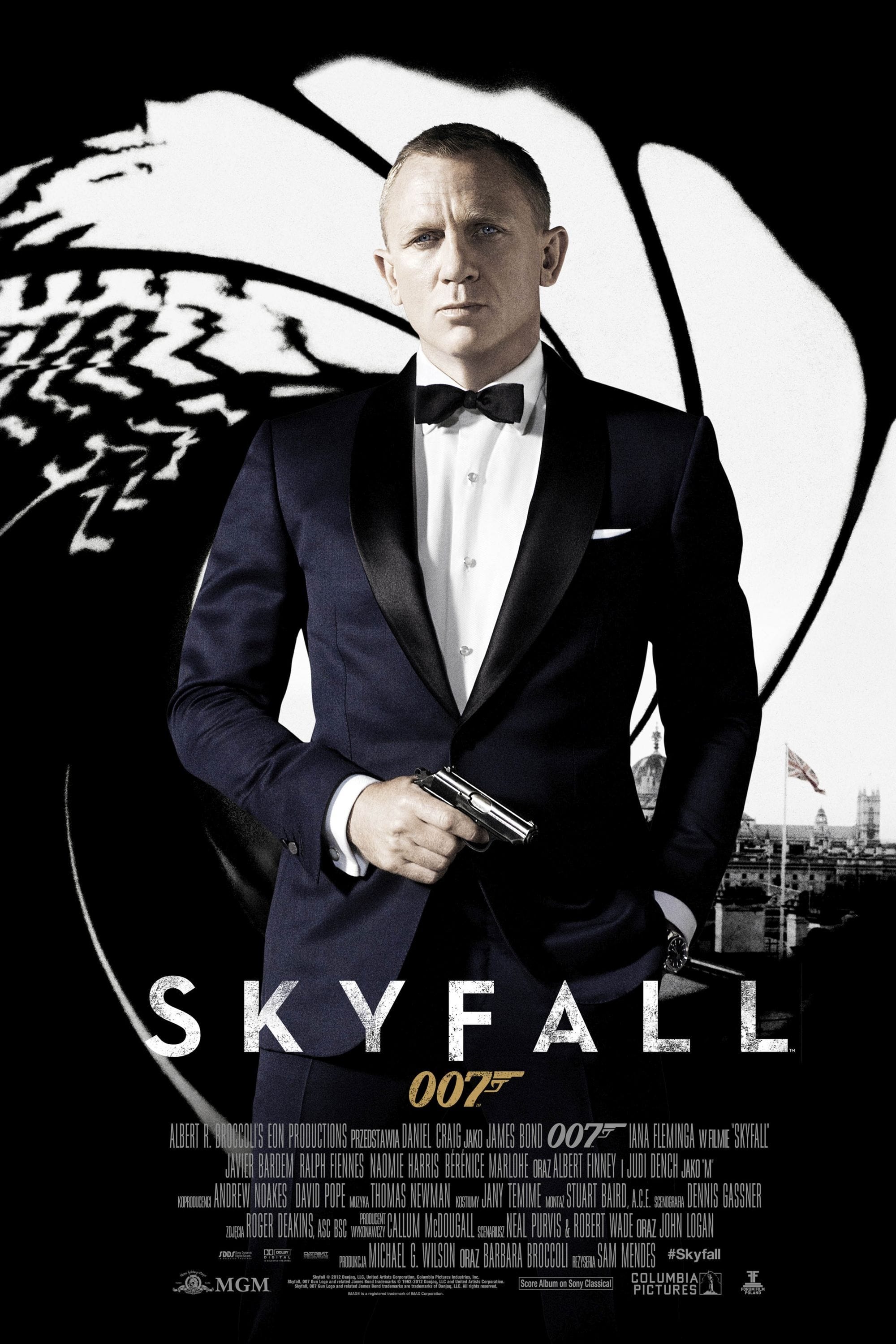 The Bond franchise has never particularly been my cup of tea. In some of the older stories I found the plots little bit sexist, it was as though a lot of the time women were temporary accessories to his arm: eye candy, I am aware that there is M who is a strong female character but a few more couldn't hurt. I also have found the villains to be rather two dimensional and repetitive, their frequently foreign and have some form of medical flaw, such as a scar or a dodgy eye, (for example in Skyfall, Silva is Portuguese and has a false jaw), of course this is not always the case but it does happen in a majority of Bond films; therefore these reasons many of the films do come across xenophobic. In addition the plots seem to only end in a climax that consists of a huge fight scene which seems to me like an dues ex machina to me.
However I found Skyfall to be different and more enjoyable from the past bond films. I found the character to be a little more developed and to cinematography much more pleasing. I think I respond in this way because of how different Skyfall is the any of the other films; we see bond regaining his strength/skill instead of just maintaining it. One character I particularly enjoyed was Q (played by Ben Whishaw), His acting was superb and the character added some much needed comic relief during parts of the film, It was refreshing to have a sweet and reserved character in between all the violent action scenes; he was British sophistication itself.
Friday, 31 October 2014
SOUND ~ Skyfall
 The fast pace music throughout the clip adds to the narrative by creating tension and suspense. As the clip progresses the sound of trumpets are added to the shot. The first sound of trumpets sound we hear in the clip is when Eve looks over to her right to see that the train is going to travel into a tunnel, this is effective as we realise that the character Eve has a limited amount of time to take the shot, thus tension and suspense is created. As the climax of the fight scene progresses the sound of the violins increase in a high pitched minor key, this musical gesture is a classic way (especially in a fight scene) of pushing the audience to the edge of their seat, the audience is now craving the outcome. This non-diegetic mood music has a pace that is elevated as it progresses, as it is an action scene this could be to mirror the sound of and elevated heart rate that would also increase as the suspense and tension in the scene rises.
 When we see Bond get shot all music is silenced, all the sound that remains is a faint echo of the gun shot, the sound of the wind against Bonds falling body and then the eventual splash of his body hitting the water, this could be adding to the narrative by showing a moment of reflection on the event that just took place. These diegetic sounds within the silence are hyper-realistic, this has been done to create more feeling within the audience; to emotionally invest them in the consequences.
Thursday, 9 October 2014
Film Response - Full Metal Jacket (Directed by Stanley Kubrick)

4.0

One of things I love about this film is the quirky structure. The film is divided in to three parts; part one: Parris island training, part two: life in Vietnam and part three: war in Vietnam. Kubrick uses fades outs to suggest the endings of each part. The diversity of each act almost makes the film seem as though it is three short films with reoccurring characters. This interesting structure differs from the usual two act screenplay formula; this makes the story tell process longer but it also makes the viewer more connected with the characters.
The film should be highly praised on it's blunt telling of the messiness of war. Many American film about the Vietnam war exaggerate the plot to eventually become rather bias. The story although fiction depicts many truths about the Vietnam war; such as the propaganda sent to the US about the war giving false hope and confidence to the American people. One of the reasons I love Jokers character, played by Matthew Modine, is because he tells it as it he doesn't seem to want to glamorize this war but those superior are pressuring him to exaggerate the truth.
Wednesday, 8 October 2014
CINEMATOGRAPHY~ Full Metal Jacket


 |
| Peace badge on display (left). Peace badge not on display (right). |
Monday, 22 September 2014
MISE-EN-SCENE ~ Annie Wilkes (Misery)
Annie Wilkes
is a former nurse and the main antagonist of the 1987 novel, Misery, written by
Stephen King, and its film adaptation (directed by Rob
Reiner). The character Annie Wilkes has an extremely wayward disposition. Our
initial impressions of Annie (played by Kathy Bates) is that she is lonely and
a bit of bookworm (towards Paul Sheldon Novels at least),
but towards the end of the story we realise that she is dangerously insane and
bipolar, who has a history of murders that she committed.

Many props
in the film are silver; the knife, the typewriter, the gun, Paul’s wheelchair.
The colour silver can be associated with feminine power; this can directly correlate
with Annie’s character because Annie uses the pills to manipulate Paul and also
because Paul is so weak she has power over his life while she nurses him back
to health. The colourless energy of
silver can lead to negative feelings of coldness this could be a pathetic
fallacy towards the weather that proceeds while Paul is a held captive in
Annie’s home.
The lighting often correlates with Annie’s mood swings. When Annie tells Paul she loves him, it’s the night time and raining. Although Annie does not show much violent anger in this scene she says “The rain gives me the blues”, she also pulls a gun from her pockets and says to Paul “Sometimes I think about using”. In this scene there is low-key lighting (a common trait in nearly all horror films).
Film Response – Misery (Directed by Rob Reiner)

3.5
 Although I
enjoyed the concept of the film and got a kick out of some of the gruesome
parts, the film itself fails to deliver. It never uses its full potential to
explore the psychological realms of depth that must be going through these two
characters’ heads. For me the film doesn’t ask why she singled out Paul’s Misery novels, and it doesn’t even seem
like she is some perverse mastermind with sinister motives to hold him there
from the very beginning, this was something that bothered me greatly. Another
thing I didn’t enjoy about this film is that the Misery novels made me feel like some outsider, I felt like I wasn’t
in on this epic tale and that in actual fact does not exist, it annoyed me
because these books are a huge part of the plot and the viewer just has to guess
and fill in the gaps with scraps of information that is blurted out by the
characters.
Although I
enjoyed the concept of the film and got a kick out of some of the gruesome
parts, the film itself fails to deliver. It never uses its full potential to
explore the psychological realms of depth that must be going through these two
characters’ heads. For me the film doesn’t ask why she singled out Paul’s Misery novels, and it doesn’t even seem
like she is some perverse mastermind with sinister motives to hold him there
from the very beginning, this was something that bothered me greatly. Another
thing I didn’t enjoy about this film is that the Misery novels made me feel like some outsider, I felt like I wasn’t
in on this epic tale and that in actual fact does not exist, it annoyed me
because these books are a huge part of the plot and the viewer just has to guess
and fill in the gaps with scraps of information that is blurted out by the
characters.
But there are
some of good aspects of this film that I greatly enjoyed. For example, the
scene where Paul and Annie have dinner they toast the Paul’s books, they say
that they toast to Misery, (“To Misery?” [Paul]. “To Misery.” [Annie]), this almost has a
comedic element because it seems like they are in fact toasting to mental
discomfort and sadness instead of Paul’s books. I also found myself routing for
the sheriff, I think this is the case because I find that he is a believable
character. This was effective as I found his presence in the film became like some
fresh air of sanity and hope, it was refreshing to know that people were
looking for Paul. There was almost a strange contrast of the way in which
people cared for Paul; Annie cared but was obsessed and kept him hidden away
for her own self afflictions whereas the outside world cared and wanted to know
where he was to ensure his safety.
Subscribe to:
Posts (Atom)