Metal Set - Handwriting

Monday, 5 October 2015

Film Response - City of God (Directed by Fernando Meirelles and Kátia Lund)


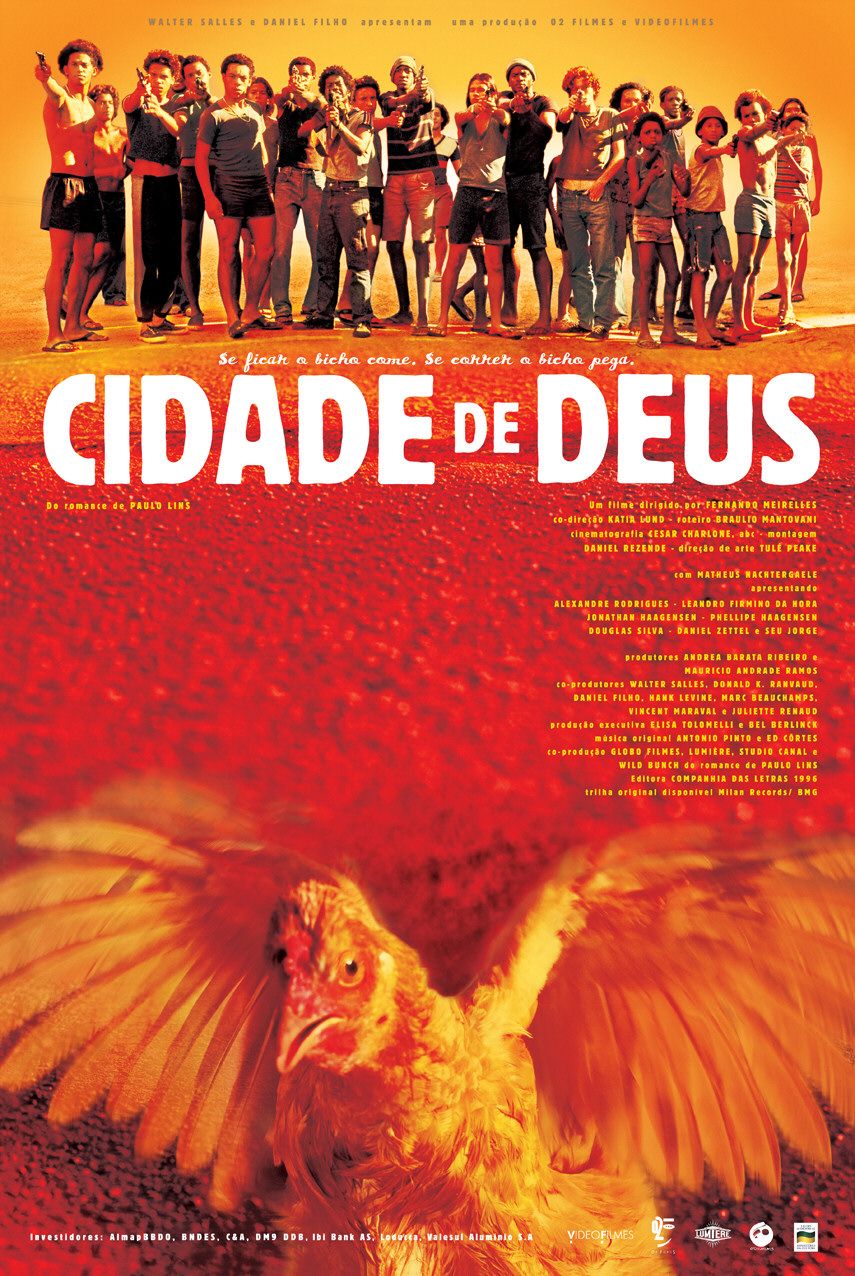
Extra Large Movie Poster Image for City of God
The film revolves around the, 'City of God,' a favela (or ghetto) in Rio de Janeiro, Brazil, a horrifying area where drug dealers run the community, and where children killing children is not an uncommon occurrence. The story begins with the early stages of the City of God (in the 1960's) showing where many of the problems stem from- the extreme poverty, overcrowding etc. Here, in the early stages of the favela, we meet our main characters, along with the supporting cast. The story revolves mainly around two characters living in the favela, Rocket and Lil Ze, and how they take two different paths through life. Rocket's dream is to become a photographer and to escape the City of God while Lil Ze becomes a powerful gang leader and drug dealer. The film offers an unflinching look at gang life in the City of God, as it follows the favela through three decades; the 60's, 70's and 80's, and shows how violence just spirals into more violence with the disturbingly high amounts of violence in the favela, most involving teenagers and children. 

The direction, cinematography, and editing are all Oscar-worthy. The cinematography is some of the best I have ever seen - with a very visceral, jerky feel. The editing is very frantic, which makes you feel like you are on the streets of the City of God, and the direction is flawless, seamlessly blending the many elements of the story. The story, the direction, the cinematography, the editing and the acting all add up to make a excellent movie that I would recommend to all. The images of gun toting pre-teen killers are very disturbing and Meirelles uses them relentlessly to underscore just how hopeless and frighteningly predetermined life is for these kids.

Wednesday, 23 September 2015

Macro and Micro

Micro Elements

  • Editing
  • Sound
+ Diegetic Sound - Sound whose source is visible on the screen or whose source is implied to be present by the action of the film.
+ Non-diegetic Sound - Sound whose source is neither visible on the screen nor has been implied to be present in the action.
  • Camera Angle/Movement
  • Mise-en-scene 
+ Make-up
+ Costume
+ Props
+ Location
+ Lighting

Macro Elements

  • Representation
  • Genre
  • Narrative
  • Audience

Wednesday, 4 March 2015

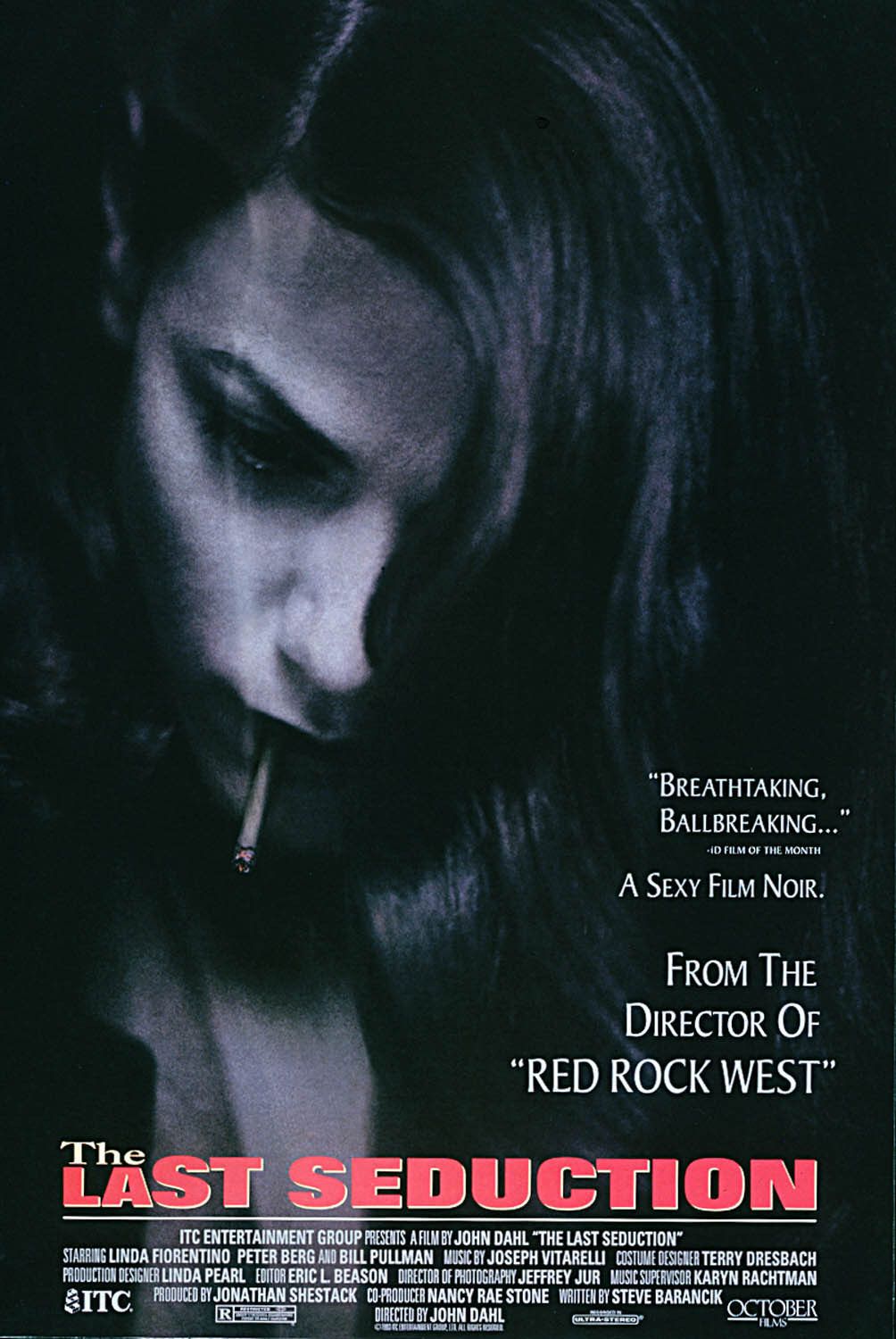
Film Response - The Last Seduction (Directed by John Dahl)


3.8

The Last Seduction is a film I have very mixed feelings about. The highly gritty nature of the film, at times, can seem a bit too accessive; the nudity, the language and the general emotional overtones can seem over the top and there to just make the film purposefully shocking. However without it I don't believe the film woul be as effect to create dominance and strength for the character Bridget. Bridget, as vindictive and sour as she may seem, is such a refreshing character to come across. It is rare these days that we see such a strong and masterful female character, anti-heroes like this are a joy to watch and I am a sucker for an anti-hero.

The film falls in to the Neo-Noir genre, but I like to think of it very separte from Noir itself. The Last Seduction has thrown the Hays Code out of the window, not a window - more like cliff. It is so far from any kind of any restrictions, the creators really have gone for it and gone for it hard. It is possible that with some restrictions that the film could have creatively gone around them, but would this of made a better film? I don't think so. The film was made for a modern audience, this is obvious, but it is so far past the original genre, I think it's stiring it to a wrong place.

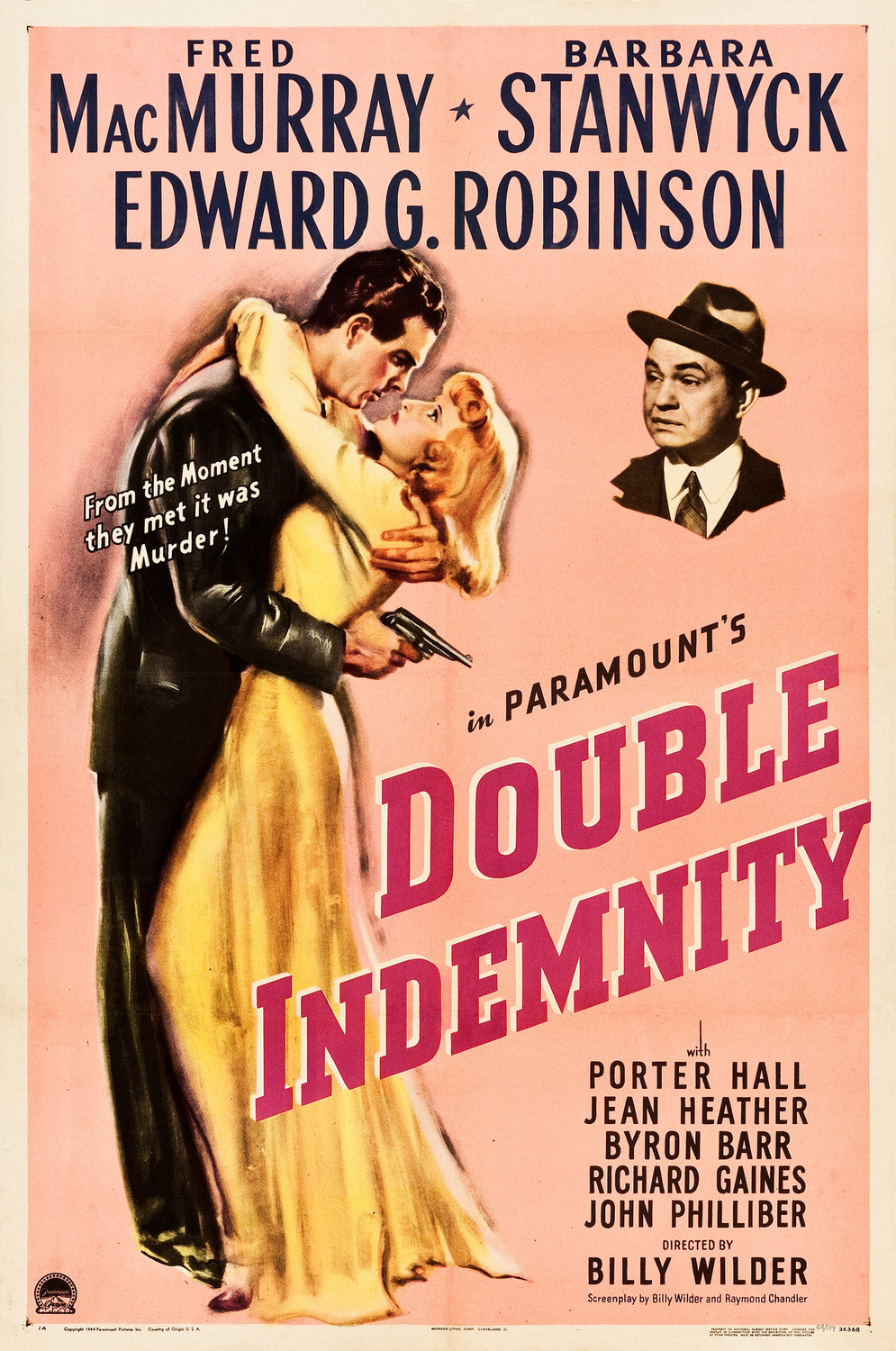
Film Response - Double Indemnity (Directed by Billy Wilder)

4.5

Double Indemnity is a story about an insurance representative who lets himself be talked into a murder/insurance fraud scheme that arouses an insurance investigator's suspicions. I really enjoyed this film. It was, admittedly, the first noir I ever watched and I feel that it won't be the last. What was especially enjoyable to me was the fact that many of the visuals often had second meanings, for example the venetian blinds could mean entrapment or the use of cigarettes to show the friendship between Barton and Walter. Sixty years later, it's as taut and engaging and beautiful as any contemporary story. It simmers, it sizzles, the tension between Neff and Dietrichson is positively palpable. But, as the tension between Neff and Dietrichson fizzles, the tension between Neff and Keyes heats up. It's as pure a sample of classic film noir as there is, and it does it with unparalleled style. The story of how and why he dunit, of how he was intoxicated and bewitched, yet came to his senses, not soon enough to save him legally, but at least to come to terms with his own failure was it's own level of great. Fun, different, refreshing. At least to me, that's Double Indemnity.


Friday, 21 November 2014

Film Response - Cape Fear (Directed by Martin Scorsese)

2.6

Personally I feel as though psychological thrillers (or even any kind of thriller for that matter) should be subtle, but Cape Fear just does not bother with this. Many parts are very exaggerated, extreme and kind of unrealistic: for example when Cady is beaten quite severely with chains he just gets back up and beats them beat up as if what happened to him was nothing. Unfortunately this makes the film come off as rather corny; it seems to use every trick in the book to try and scare the viewer, but in trying too hard, it fails. The cinematography and editing are very unimaginative: for example the use of inverting the colours in certain moments to somehow create suspense, to me its not scary it's  just uncomfortable to look at.

One of the key things about this film that seriously gets on my nerves is the acting of Juliette Lewis as her character Danielle. The have been other films in which I found her acting a little sterile, non more so than this particular film. Essentially the acting is just bad but to be more specific she seems like she doesn't quite know what shes doing, her body language is confusing and forced.

But what I will merit the film on is Cady's brand of evil is quite disturbing and he brutally takes it out on the clerk, Lori who has a crush on Sam. The scene with him seducing the young Danielle who's just started to explore her sexuality and is mainly attracted to the bad guys and anyone who makes her father angry, was chilling to say the least.

Thursday, 13 November 2014

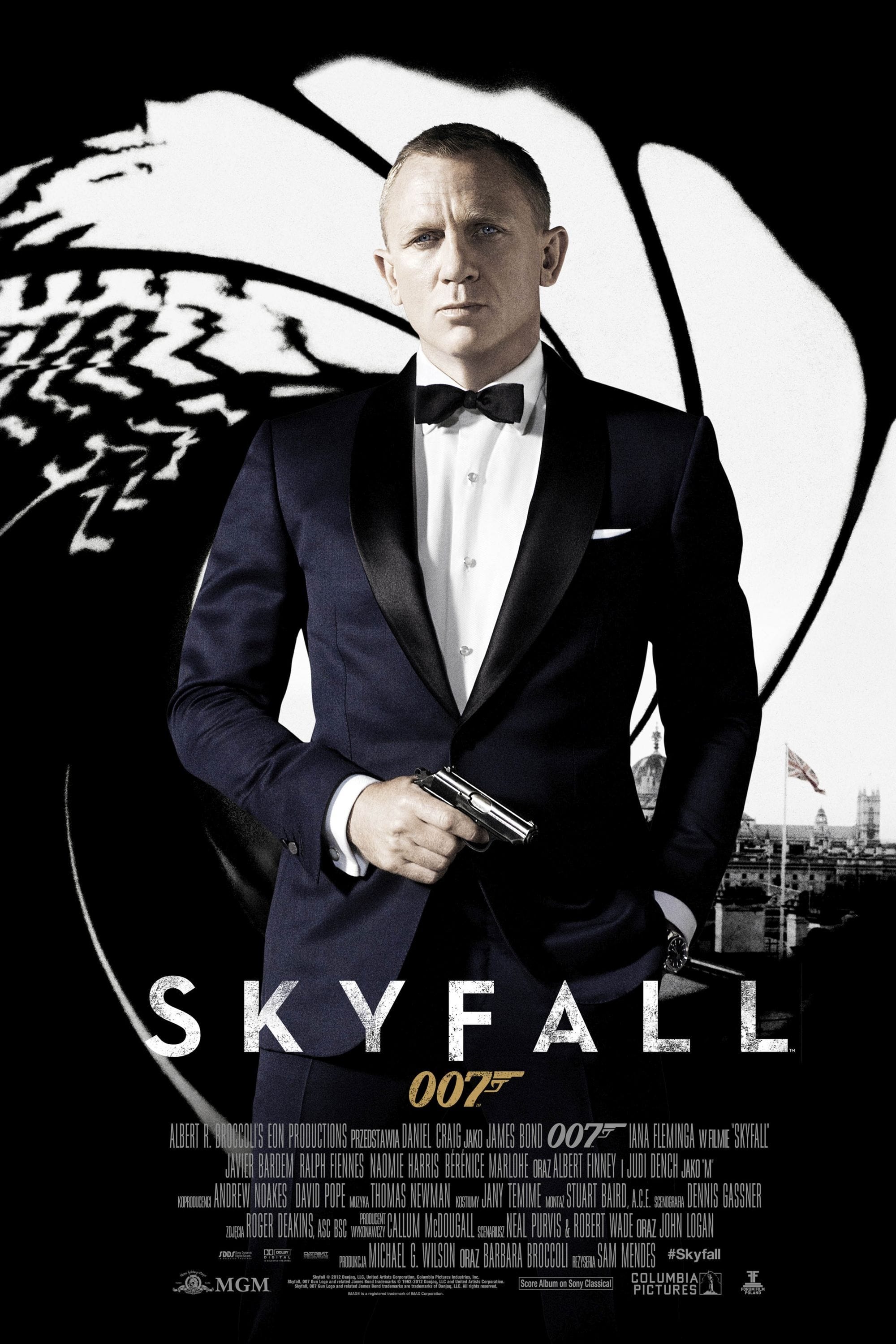
Film Response - Skyfall (Directed by Sam Mendes)

3.7

The Bond franchise has never particularly been my cup of tea. In some of the older stories I found the plots little bit sexist, it was as though a lot of the time women were temporary accessories to his arm: eye candy, I am aware that there is M who is a strong female character but a few more couldn't hurt. I also have found the villains to be rather two dimensional and repetitive, their frequently foreign and have some form of medical flaw, such as a scar or a dodgy eye, (for example in Skyfall, Silva is Portuguese and has a false jaw), of course this is not always the case but it does happen in a majority of Bond films; therefore these reasons many of the films do come across xenophobic. In addition the plots seem to only end in a climax that consists of a huge fight scene which seems to me like an dues ex machina to me.

However I found Skyfall to be different and more enjoyable from the past bond films. I found the character to be a little more developed and to cinematography much more pleasing. I think I respond in this way because of how different Skyfall is the any of the other films; we see bond regaining his strength/skill instead of just maintaining it. One character I particularly enjoyed was  Q (played by Ben Whishaw), His acting was superb and the character added some much needed comic relief during parts of the film, It was refreshing to have a sweet and reserved character in between all the violent action scenes; he was British sophistication itself.

Friday, 31 October 2014

SOUND ~ Skyfall


The fast pace music throughout the clip adds to the narrative by creating tension and suspense. As the clip progresses the sound of trumpets are added to the shot. The first sound of trumpets sound we hear in the clip is when Eve looks over to her right to see that the train is going to travel into a tunnel, this is effective as we realise that the character Eve has a limited amount of time to take the shot, thus tension and suspense is created. As the climax of the fight scene progresses the sound of the violins increase in a high pitched minor key, this musical gesture is a classic way (especially in a fight scene) of pushing the audience to the edge of their seat, the audience is now craving the outcome. This non-diegetic mood music has a pace that is elevated as it progresses, as it is an action scene this could be to mirror the sound of and elevated heart rate that would also increase as the suspense and tension in the scene rises.

When we see Bond get shot all music is silenced, all the sound that remains is a faint echo of the gun shot, the sound of the wind against Bonds falling body and then the eventual splash of his body hitting the water, this could be adding to the narrative by showing a moment of reflection on the event that just took place. These diegetic sounds within the silence are hyper-realistic, this has been done to create more feeling within the audience; to emotionally invest them in the consequences.